
 All vikis
Starship and Mars
Elon Musk unveiled his Mars rocket on Sep 27, 2016 and has since named 2022, 2024 and 2026 for the first Mars flights. As of Nov 9, 2026 no ship has gone to Mars, SpaceX lists Mars cargo from 2028, and Starship reached orbit for the first time on Sep 28, 2026.
As of Nov 9, 2026, no SpaceX ship has left for Mars, and SpaceX's own Mars page says Starship cargo flights to the Martian surface "start no earlier than 2028", at $100 million per metric ton. The rocket itself is further along than ever: Starship reached orbit for the first time on Sep 28, 2026, and Flight 15 is set for as soon as Nov 13, 2026, pending regulatory approval, with the first attempt to catch both stages at the tower. Musk first showed the Mars system, then called the Interplanetary Transport System, at the International Astronautical Congress in Guadalajara on Sep 27, 2016. In the clip from SpaceX's video of the talk, he says that "if things go super well" Mars might come "in the ten-year time frame", and adds at once that there is a "good chance we don't succeed".
Status: Late. Last checked: Nov 9, 2026.
Quick facts
| Maker | SpaceX |
| Announced | Sep 27, 2016, International Astronautical Congress (SpaceX) |
| First Starship flight | Apr 20, 2023, suborbital (SpaceX) |
| First orbit | Flight 14, Sep 28, 2026 (SpaceX) |
| Next flight | Flight 15, first try to catch both stages (SpaceX) |
| Mars cargo | "No earlier than 2028", $100 million per metric ton (SpaceX) |
What he announced
The 2016 talk, "Making Humans a Multiplanetary Species", laid out a fully reusable booster and spaceship, refilled with propellant in Earth orbit, carrying about 100 people per trip. Musk said the architecture allowed "a cost per ticket of less than $200,000", perhaps $100,000 over time, and promised an uncrewed Dragon to Mars "in a couple years", then another in 2020.
A year later, on Sep 29, 2017 in Adelaide, he shrank the design into the BFR and gave it a calendar. In SpaceX's video of that talk he says the first two cargo ships should fly in 2022 ("that's not a typo, although it is aspirational"), and that in 2024 SpaceX wanted to "fly four ships, two of which would be crewed". The BFR became Starship, the name it flies under today.
Every promised Mars date, and what happened
| Promised | When he said it | What happened |
|---|---|---|
| Uncrewed Red Dragon to Mars in 2018, another in 2020 | Sep 27, 2016, IAC talk | The launch slipped to 2020, and in Aug 2017 NASA officials said SpaceX had put Red Dragon on the back burner (Spaceflight Now). It never flew. |
| A Mars ticket under $200,000 | Sep 27, 2016 | No crewed price exists. SpaceX quotes Mars cargo at $100 million per metric ton (read Nov 9, 2026). |
| Two cargo ships to Mars in 2022 | Sep 29, 2017, IAC talk | Starship first flew, suborbitally, on Apr 20, 2023. |
| Four ships, two crewed, in 2024 | Sep 29, 2017 | No Starship had reached orbit by the end of 2024. |
| First uncrewed Starships to Mars in the 2026 window; crews four years later | Sep 7, 2024, post on X | On Feb 8, 2026 he said SpaceX had shifted focus to the Moon. No Mars launch is planned for the window now open. |
| A "50-50 chance" of making the end of 2026 | May 29, 2025, SpaceX video | Missed, as above. |
| First flight without humans in "~3.5 years", humans in "~5.5 years" | Aug 6, 2025, post on X | Points to about early 2029 and early 2031. Not yet due. |
| Begin a Mars city "in about 5 to 7 years" | Feb 8, 2026, post on X | Not yet due. |
What happened since
Starship flies, 2023 to 2025. The first integrated flight on Apr 20, 2023 climbed to about 39 km before it was lost. Over the next flights SpaceX caught Super Heavy boosters in the launch tower's arms: its Flight 15 page counts three earlier-generation boosters caught, two of them flown again. Every flight before Flight 14 was suborbital.
The bigger V3 Starship, 2026. The first V3 flight, Flight 12 on May 22, 2026 from the new Pad 2, put the ship down softly in the Indian Ocean, but the booster could not relight enough engines for its boostback burn and crashed in the Gulf, an event the FAA said fell inside the cleared hazard area (SpaceQ). On Jul 24, 2026, Flight 13 deployed 20 Starlink V3 satellites on a suborbital path and its ship came to rest intact in the Indian Ocean for the first time.
Orbit, Sep 28, 2026. On Flight 14, one vacuum engine shut down early on the way up, the remaining five burned longer, and the ship relit a sea-level Raptor to enter orbit, deployed all 26 Starlink V3 satellites, and made its first deorbit burn. Out of caution after the engine loss, SpaceX cut the flight short and splashed down in the North Pacific after 3 hours, 8 minutes, instead of the planned six orbits. That was 14 integrated flights in all.
The Moon first, Feb 2026. NBC News reported on Feb 9, 2026 that The Wall Street Journal had said SpaceX told investors it would target March 2027 for an uncrewed lunar landing and attempt Mars later. Musk wrote the day before that a Moon city could take "less than 10 years, whereas Mars would take 20+ years", because ships can leave for the Moon every 10 days but for Mars only every 26 months (X). The Mars transfer window that opens in late 2026 is the one he had named in 2024, and SpaceX's own page now points to 2028.
Starship as NASA's Moon lander
NASA picked Starship on Apr 16, 2021 to land the first Artemis astronauts, a $2.89 billion fixed-price contract. The plan has since been rebuilt. In its Nov 4, 2026 update, NASA describes Artemis III, in 2027, as a 14-day crewed flight in Earth orbit that docks Orion with test versions of both landers, SpaceX's and Blue Origin's, and Artemis IV, in 2028, as the planned landing. For Artemis IV, Starship would refuel in Earth orbit, meet Orion there and carry it toward the Moon, and NASA says both companies are "targeting to be able to support a crewed lunar landing in 2028". Refueling one Starship from another in orbit, which the lunar plan and every Mars plan need, has not been demonstrated as of Nov 9, 2026; SpacePolicyOnline notes SpaceX still has to build the depot and show cryogenic transfer in space (Sep 28, 2026).
Why "late": Musk's dates for Mars ships (2022, 2024, 2026) have all passed without a launch, while SpaceX still says Mars is the goal and gives 2028 as the earliest cargo date. The Moon lander, the other job Starship has been sold for, is on NASA's schedule for 2027 and 2028, so that part has not yet missed a date under the current plan.
We think
We think no Starship will launch toward Mars in the late 2028 window either. As of Nov 9, 2026 Starship has made one orbital flight, propellant transfer between ships is still undemonstrated, and SpaceX's own priority, by Musk's Feb 8, 2026 post, is the Moon, where NASA's crewed landing target is also 2028. Two first-of-a-kind campaigns needing dozens of refueling flights in the same year look unlikely.
Confidence: Likely. Check by: Jan 2029.
We expect SpaceX to demonstrate ship-to-ship propellant transfer in orbit before the Artemis III docking test flies, since its Artemis IV plan depends on a refueled Starship and NASA has framed the 2027 flight as the trial for which lander goes first.
Confidence: Possible. Check by: Dec 2027.
Sources
- Making Humans a Multiplanetary Species, SpaceX on YouTube, Sep 28, 2016
- Making Life Multiplanetary, SpaceX on YouTube, Sep 29, 2017
- Mars & Beyond, SpaceX, read Nov 9, 2026
- Updates, SpaceX, read Nov 9, 2026
- Starship's Thirteenth Flight Test, SpaceX, Jul 24, 2026
- Starship Flight 14, SpaceX, Sep 28, 2026
- Starship Flight 15, SpaceX, Nov 7, 2026
- Starship flight 12 validates V3 reentry systems despite early booster termination, SpaceQ, May 24, 2026
- Starship Achieves Orbit for the First Time, SpacePolicyOnline, Sep 28, 2026
- SpaceX informed NASA of slowdown in its commercial Mars program, Spaceflight Now, Aug 18, 2017
- Elon Musk plans to send SpaceX's uncrewed Starships to Mars in 2 years, South China Morning Post, Sep 8, 2024
- Musk says 50-50 chance of sending uncrewed Starship to Mars by late 2026, Al Jazeera, May 30, 2025
- Post on Mars timing, Elon Musk on X, Aug 6, 2025
- Post on the Moon city, Elon Musk on X, Feb 8, 2026
- In a reversal, SpaceX prioritizes 'city' on the moon over Mars project, Musk says, NBC News, Feb 9, 2026
- As Artemis Moves Forward, NASA Picks SpaceX to Land Next Americans on Moon, NASA, Apr 16, 2021
- NASA Shares Plans to Accelerate Artemis, Return to Moon, NASA, Nov 4, 2026
Moments
Making Humans a Multiplanetary Species
SpaceX
Making Life Multiplanetary
SpaceX
Related
-
 OptimusElon Musk announced Tesla's humanoid robot, Optimus, at AI Day on Aug 19, 2021. As of Nov 9, 2026 Tesla has begun early production in Fremont but has delivered none to an outside customer; Musk now expects that toward the end of 2027.
-
 Robotaxi and CybercabElon Musk unveiled the Cybercab, a two-seat robotaxi with no steering wheel or pedals, at Tesla's We, Robot event on Oct 10, 2024. As of Nov 9, 2026 Tesla runs driverless Robotaxi rides in seven metro areas of Texas and Florida, Cybercabs carry paying riders in Austin since Sep 2026, and NHTSA is auditing how Tesla certified the car.
-
 Tesla RoadsterElon Musk announced the second Tesla Roadster on Nov 16, 2017, promising it for 2020. As of Nov 9, 2026 none has been delivered; Tesla showed a new version on Oct 15, 2026 and Musk said production starts in 2028.
-
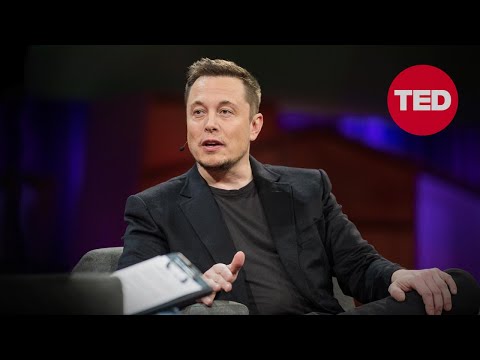 The Boring Company TunnelsElon Musk said on Dec 17, 2016 he would build a tunnel boring machine to beat traffic. As of Nov 9, 2026 his Boring Company runs one system, the Vegas Loop, with 13 active stations and more than 4 million riders, while its Los Angeles, Chicago and Washington plans stopped.
-
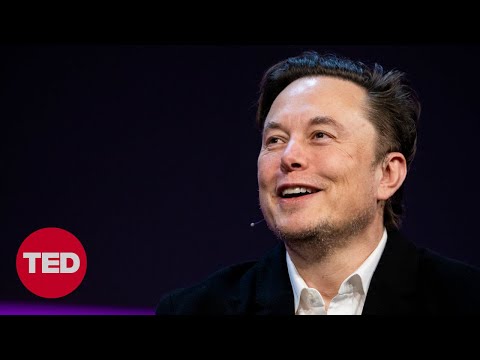 Twitter Purchase and XElon Musk offered to buy Twitter on Apr 14, 2022 and took control on Oct 27, 2022 for about $44 billion, then renamed it X and promised an "everything app". As of Nov 9, 2026 X is part of SpaceX, and its payments service, X Money, opened only to paying US subscribers in Jul 2026.
-
 xAI and GrokElon Musk announced xAI on Jul 12, 2023 and its chatbot Grok on Nov 3, 2023, and promised Grok 5 by the end of 2025, then early 2026. As of Nov 9, 2026 Grok 5 is not out, the newest model is Grok 4.7, and xAI is part of SpaceX, signing as SpaceX Super Intelligence.
-
Elon MuskElon Musk's big announcements, one page each, with what he promised, what happened and a dated status. As of Nov 9, 2026 his newest is that Tesla will wind down Cybertruck production in Texas around mid-2027; of the 12 past announcements Vi.ki tracks, one was delivered as announced, five changed and six are late.
-
 PredictionsWe think Starship Flight 15 catches its booster but not its ship, and that Tesla's first Cybercabs for customers slip past the end of 2026. Vi.ki's own predictions on Elon Musk's open announcements, each with a date to check it by.
See also
-
AnnouncementsEvery big Elon Musk announcement with a page on Vi.ki, newest first, each with its date, its primary source and its status as last checked. On Nov 9, 2026 the newest tracked is Tesla's Cybercab (Oct 10, 2024, late); of 12, one was delivered as announced, five changed and six are late.
-
 CybertruckElon Musk unveiled the Tesla Cybertruck on Nov 21, 2019, from $39,900 with production in late 2021. It reached customers on Nov 30, 2023 at higher prices, and on Nov 6, 2026 Musk said Tesla will wind down its production around mid-2027.
-
 DOGEDonald Trump announced on Nov 12, 2024 that Elon Musk would lead a Department of Government Efficiency (DOGE), and Musk set savings targets of $2 trillion, then $1 trillion. DOGE's temporary organization ended on Jul 4, 2026 claiming $215 billion, and a GAO audit in Aug 2026 found much of what it checked could not be verified.
-
 Full Self-DrivingElon Musk has promised Teslas that drive themselves since 2016, and at Tesla's Autonomy Day on Apr 22, 2019 he said self-driving would be feature complete that year. As of Nov 9, 2026 Tesla sells Full Self-Driving (Supervised) for $99 a month, it still needs a driver watching the road, and Tesla says the first owners' cars could drive unsupervised around Q2 2027.
-
 HyperloopElon Musk published Hyperloop Alpha on Aug 12, 2013, a design for pods in a low-pressure tube carrying people from Los Angeles to San Francisco in 35 minutes for under $6 billion. As of Nov 9, 2026 no passenger Hyperloop runs anywhere; The Boring Company lists a short test tunnel in Texas, and Musk says it is working on a slower "precursor" tunnel from Austin to San Antonio.
-
 Neuralink First Human ImplantElon Musk announced on Jan 29, 2024 that the first person had received a Neuralink brain implant. As of Nov 9, 2026 Neuralink's last published count is 21 trial participants (Jan 28, 2026), the device is still investigational, and its Blindsight vision implant has no registered human trial.